


Chicken Keeping FAQs
One of my hens has laid a tiny egg, about the size of a £1 coin. Is this normal?
These tiny round eggs are nothing to worry about and are known as ‘fairy eggs’, wind eggs or cock eggs. They occur when the hen’s body begins to form an egg before the yolk is released. They do not contain yolk, only egg white (albumin), and often have a different shell colour to that normally laid by any of your hens. They can be the size of a grape or a ping pong ball and are usually quite a rounded shape.
Fairy eggs can occur before your young hens come fully into lay or when your hen is reaching the end of her eggs laying abilities. If you gently wash them to remove the protective layer that keeps air out, they will eventually dry out and can be used for decoration.
I’ve just got some hens. When should I expect them to lay their first eggs?
If you are feeding your hens a balanced daily feed especially formulated for laying hens such as the Smallholder Range Natural Free Range Layers Pellets, your hens will be developing with the right nutrients on board to start laying their first eggs! The Point of Lay (POL) for most breeds of hen is after 16 weeks of age. Most will start to lay after 20 weeks and this all depends on the breed and the time of year. Also, check their combs – small and light pink means they are not ready, but large and bright red means they are about to start. You can also check by feeling for the width of their pelvis from the outside of the hen at the vent. If the two points are a fingers’ width, the hen is too young, but a couple of fingers width means the hen is ready to lay.
I am picking up some new hens soon. When we bring them home, should I let them out straight away or keep them locked up for a few days?
Hens thrive on routine and need to be taught where they live, location of food and water, and where to go at night to roost. When your new hens arrive, have your hen house door open and a fully enclosed run ready. Keep them housed in the enclosed run with access to their hen house for two weeks. Provide clean and fresh layers pellets and water daily in the run. At dusk, close the hen’s door after they have all gone into roost and make sure to leave their door open during the day in case any hens are ready to lay in the nesting boxes. After two weeks, you will have established a routine for food, water and where to roost. If you don’t do this, your hens will revert to their wild cousins and head straight up the nearest tree at dusk and range far and wide for food. This can play havoc with your evening routine and flower beds!
What can I feed my hens as a treat?
After your hens have finished their morning feed of Smallholder Range Free Range Layers Pellets, they will have received a balanced diet. If you want to give them a treat, choose a mix of grains with added grit such as Smallholder Range Super Mixed Corn. Only feed an egg cup quantity per bird per day and only feed treats in the afternoon. Chickens are well known for being very greedy and will even beg for treats. Use caution though when offering treats. Too many means less room to eat the balanced layers feed which helps them lay eggs and replaces used energy. Furthermore, too many treats can lead to obesity, weak shelled eggs and being egg-bound.
Can I feed my chickens leftover food from my fridge?
To prevent the introduction and spread of notifiable diseases such as Foot and Mouth, the Animal and Plant Health Agency and Trading Standards have warned smallholders they must not feed catering or kitchen waste to livestock such as chickens, ducks, or pigs. In fact, it remains illegal to feed catering waste, kitchen scraps, meat, or meat by-products to livestock, even if they are kept as pets. Diseases such as Foot and Mouth cause devastating impact to animal health and welfare as well as the economy.
Why does it matter if a hen eats her own eggs?
Allowing hens to eat their own eggs teaches her and the other hens that they too can do this, and you will end up with no eggs to eat for yourself. If you are feeding your hens either The Organic Feed Company Layers Pellets or Smallholder Range Natural Free Range Layers Pellets with grit and the ability to forage, then your hens are getting all the balanced nutrients they need each day along with the ability to express their ‘natural behaviours’. Any eggs laid require energy, but this energy will be replaced by eating their balanced daily Layers Pellet feed. Also, keep in mind that hens are naturally greedy and adding treats to their daily diet will mean the hen fills up on treats first, leaving little room for their balanced feed; this balanced Layers feed will replace lost energy used in laying. So, keep watch and as soon as your hens lay, collect them quickly to prevent an inquisitive hen breaking the shell and getting into the habit of eating eggs.
Can hens lay eggs without a cockerel?
Healthy hens will be able to lay eggs without a cockerel. Your hen will start to lay (Point of Lay/POL) after 16 weeks, usually at around 20 weeks. Without a cockerel, her eggs will not be fertilised, so even if she becomes broody and sits on a clutch, they will never hatch.
How often can I expect my hen to lay an egg?
Depending on your breed of hen, once in lay you can expect an egg each day. Rare breeds can lay sporadically and will often stop laying as soon as the days draw in. Hybrid hens will usually lay each day and can continue to lay through their first winter. If you notice your hen has stopped laying, check if she is egg bound. Keeping your hens at the correct weight, feeding a balanced daily feed such as The Organic Feed Company Layers Pellets or the Smallholder Range Natural Free Range Layers Pellets and only feeding treats in very small quantities in the late afternoon will support a healthy weight and reduce the chance of her becoming egg bound.
I have just bought some chickens and I am looking at where to keep them in my garden. What do chickens do during the day?
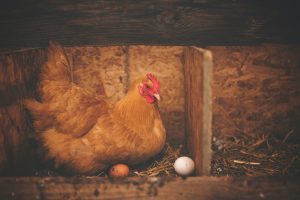
Chickens are believed to originate from jungles in Southeast Asia, so they are naturally inclined and able to fly short distances, climb trees, and search over distances for food. Their feathers are not waterproof, so they need access to year ‘round cover from heavy rain. At night, they are naturally inclined to seek a safe place off the ground to roost. During the day, when not foraging for food, they seek out dimly lit, secluded and quiet areas to lay their eggs in peace as egg laying takes time. Chickens need a place with fine soil or sand to dust bathe helping to keep their feathers and skin clean. They will spend quiet time preening when they use their beaks and head to rub along the preen gland, then wipe the preen gland oil over their feathers, positioning them and keeping the feathers clean and ectoparasites in check. The way to keep your chickens natural behaviour fulfilled in your garden is to provide a secure coop with roosting and laying box areas, secure run with dust bathing areas and a surface they can dig into and preferably a fenced grassy area to roam and search for grubs and bugs.
My Battery hens have just arrived. When can I expect them to start laying?
Feeding your new arrivals a balanced daily feed, such as the Smallholder Range Natural Free Range Layers Pellets or The Organic Feed Company Layers Pellets, will get your new hens off to the best start for their recovery to become free-ranging hens and cockerels. Your new arrivals may be in poor health, need to regrow their plumage, put on weight or maybe going through a moult whereby they are re-growing their plumage. Feeding them a balanced daily diet with the ability to forage and access to grit, will provide them with all they require to support good health. Your hens will start to lay once they are settled and any additional energy requirements have been fulfilled. Growing new plumage takes a lot of energy that you need to supply from their balanced daily feed. Moulting also takes a great deal of energy as does being unwell and needing to put on weight. You will have a good idea of when they are about to lay as their combs and wattles are plump and red, their plumage has completely regrown and they are showing their natural behaviour – dust bathing, preening, and scratching in the soil and grass for food.